EQUIPMENT • COURTS • CARE
Court Shuffleboard Equipment Guide
A practical guide to court-shuffleboard cues, discs, court systems, parts, court preparation, maintenance, care tools and source materials.
Courts
Court

1. The complete area for play of a game, including the board, standing areas, alleys, benches, and scoreboard. 2. In tournament rules, the court includes the board plus a rectangular area at each end defined by the baseline, an imaginary line even with the back of the bench, and the farthest side of each adjoining alley.
Image: Bernar · Source
Official Court Specifications
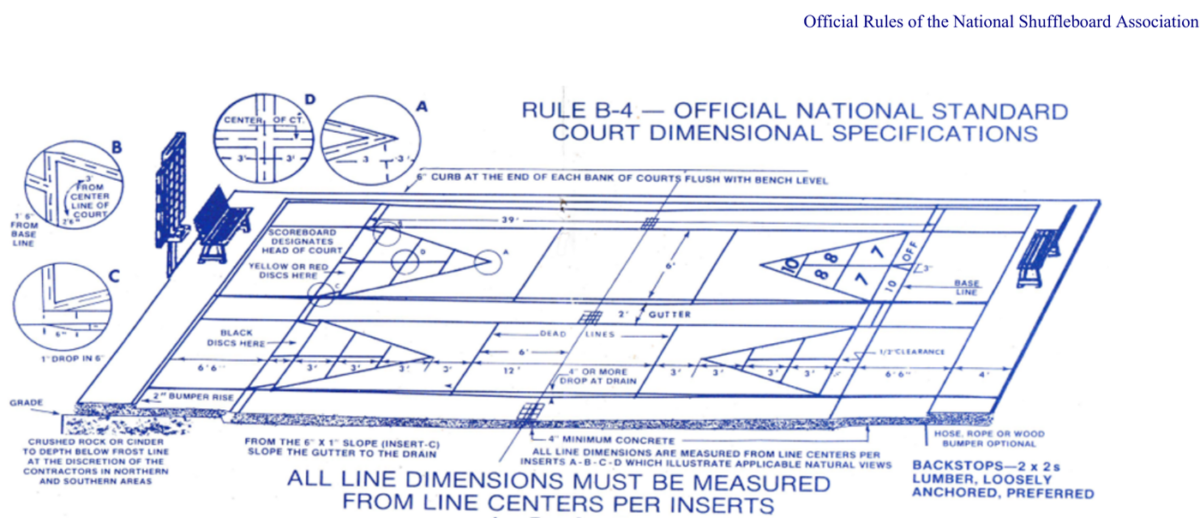
Official USA NSA court dimensional specifications: the official court-layout diagram and instructions for building a court, from the current national rules.
Image: USA National Shuffleboard Association · Source
Building a Court
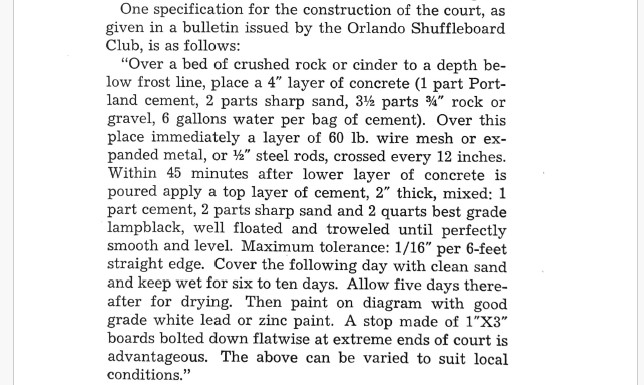
Court-construction guidance covering site preparation, forms, reinforcement, concrete, leveling, curing, markings, court dressing, and backstops excerpted from four shuffleboard books:
•Shuffleboard: Technique Theory Strategy | W. A. Rosenburger | 1949
•Secrets Of Shuffleboard Strategy | Omar Catan | 1966
•Let's All Play Shuffleboard | Karl Von Schuler | 1970
•Shuffleboard Coach Series | Lary Faris | 1994
Diamond-Finished Court

A concrete court that has been made extremely smooth by the use of a diamond grinding machine and polished with diamond pads.
Image: California Shuffleboard Association · Source
Poly Court

A court constructed from interlocking plastic tiles that are assembled on a flat surface for play and can be stacked for transport or storage.
Roll-Out Court

A court constructed from a vinyl sheet, that is rolled out on a flat surface for play and can be rolled up for transport or storage. Used mostly for indoor play.
Scoreboard

A court-side scoreboard used to track game scores during play.
Image: Bernar · Source
Scoreboard Chalk & Eraser
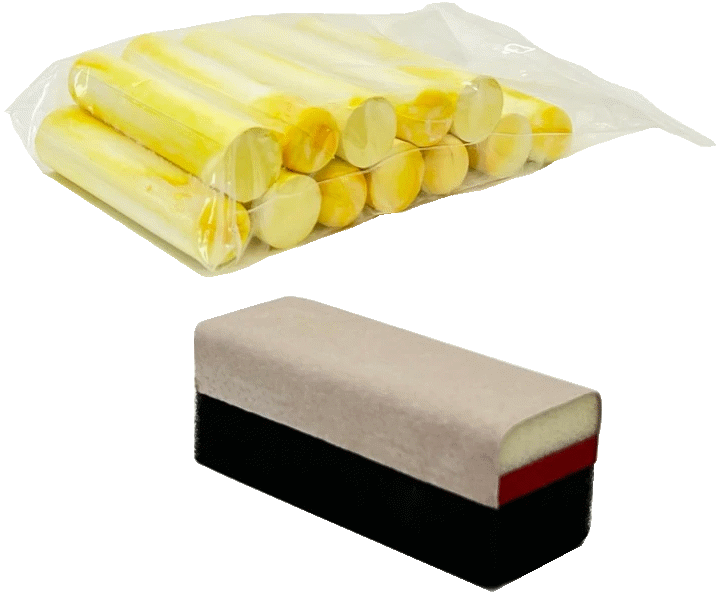
Accessories used with chalk-style scoreboards.
Scoreboard Tray

Scoreboard tray to hold chalk and eraser.
Image: Allen Shuffleboard · Source
Court Dressing
Beader
A device for spreading beads on a court.
Beads

Fine glass or plastic globules that are sprinkled on the playing area of a court to reduce the friction between the bottoms of moving discs and the court surface.
Dry Beads

Beads that have not been treated to make them wind-resistant.
Poly Glide Court Dressing
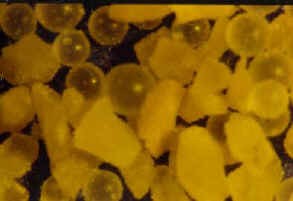
A mix of styrene beads and cornmeal used to dress a diamond-finished court before play. The cornmeal aids in keeping the beads in place on the court. This dressing comes in various configurations for various court conditions (e.g., with added silicone for wind resistance). Used in the Western USA. Syn: WAX.
Image: Poly Glide, Inc. · Source
Wet Beads
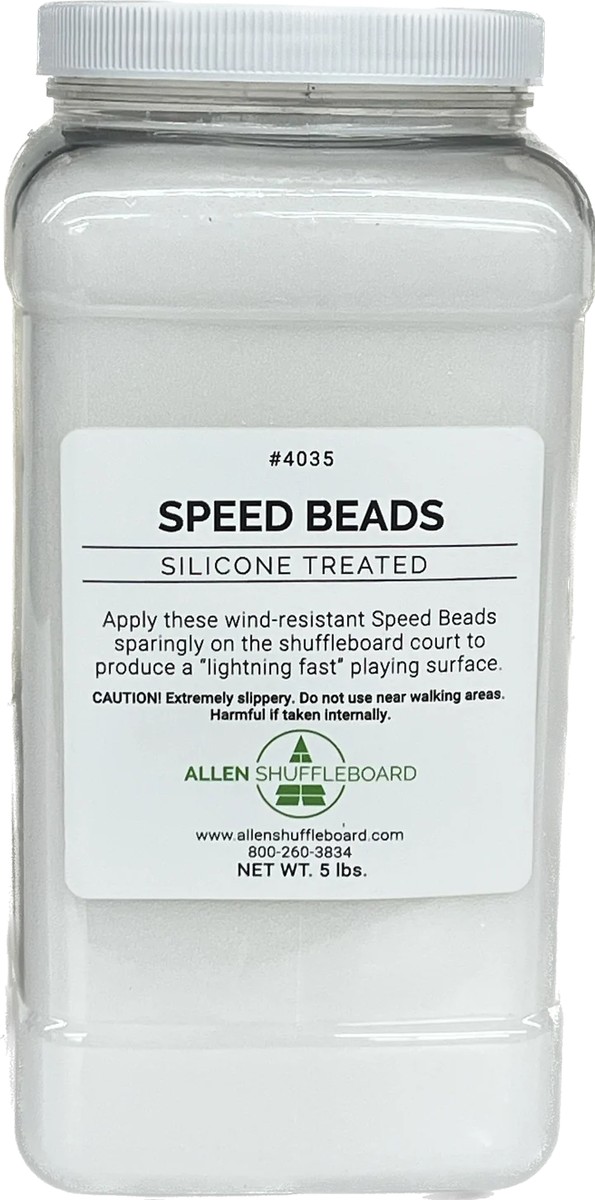
Beads that have been treated to make them wind-resistant when spread on a court. Beads can be treated by coating with a small amount of silicone, glycerin, or glycerin-containing products (e.g., dish soap; Tire Shine). Syn: WIND-RESISTANT BEADS.
Image: Allen Shuffleboard · Source
Court Maintenance
Court Maintenance Instructions
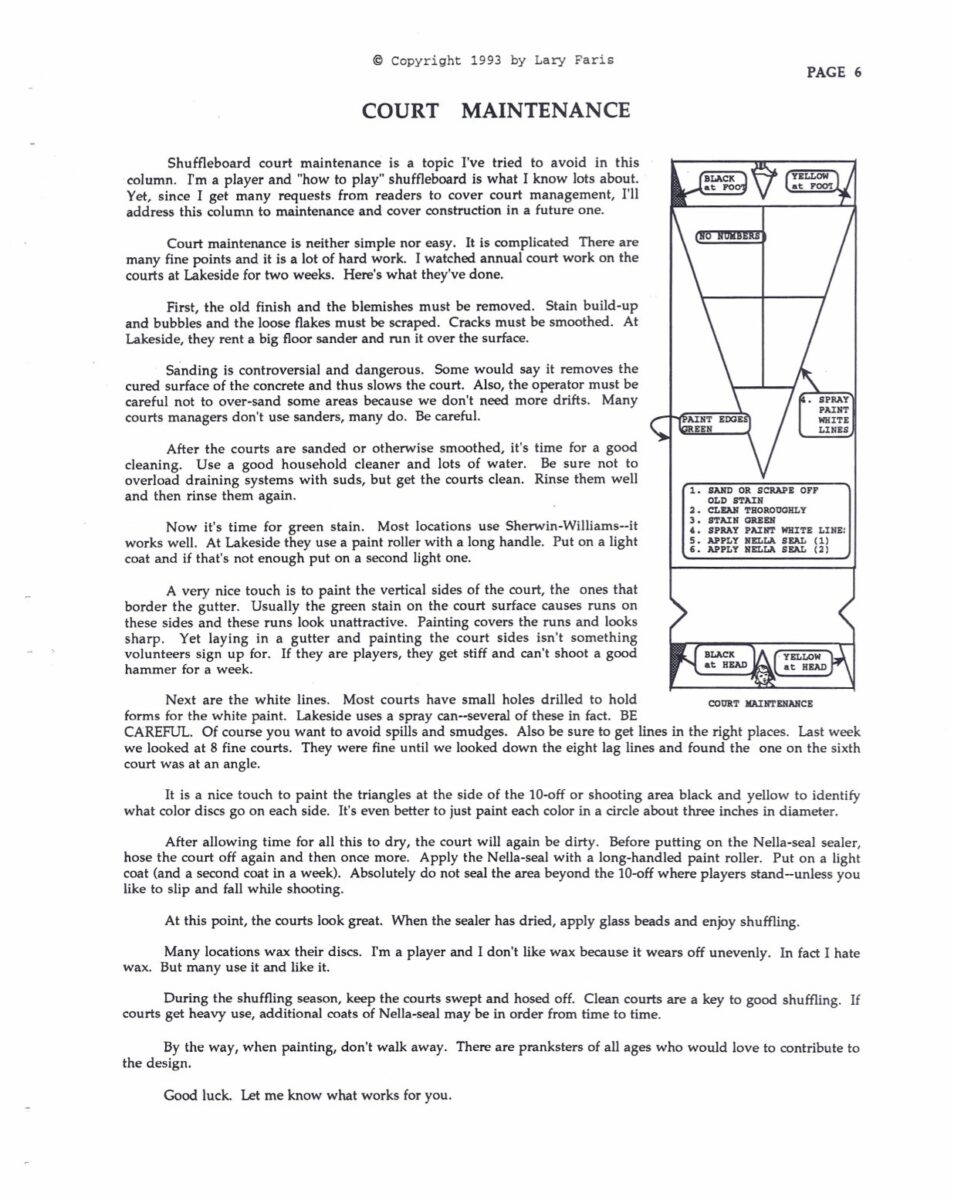
A timeless article by Lary Faris with instructions for court maintenance, including removing the old finish and blemishes, sanding the court surface, staining the surface, painting the lines and scoring triangles, and sealing the court.
Image: Lary Faris • 1993 · Source
Court Broom
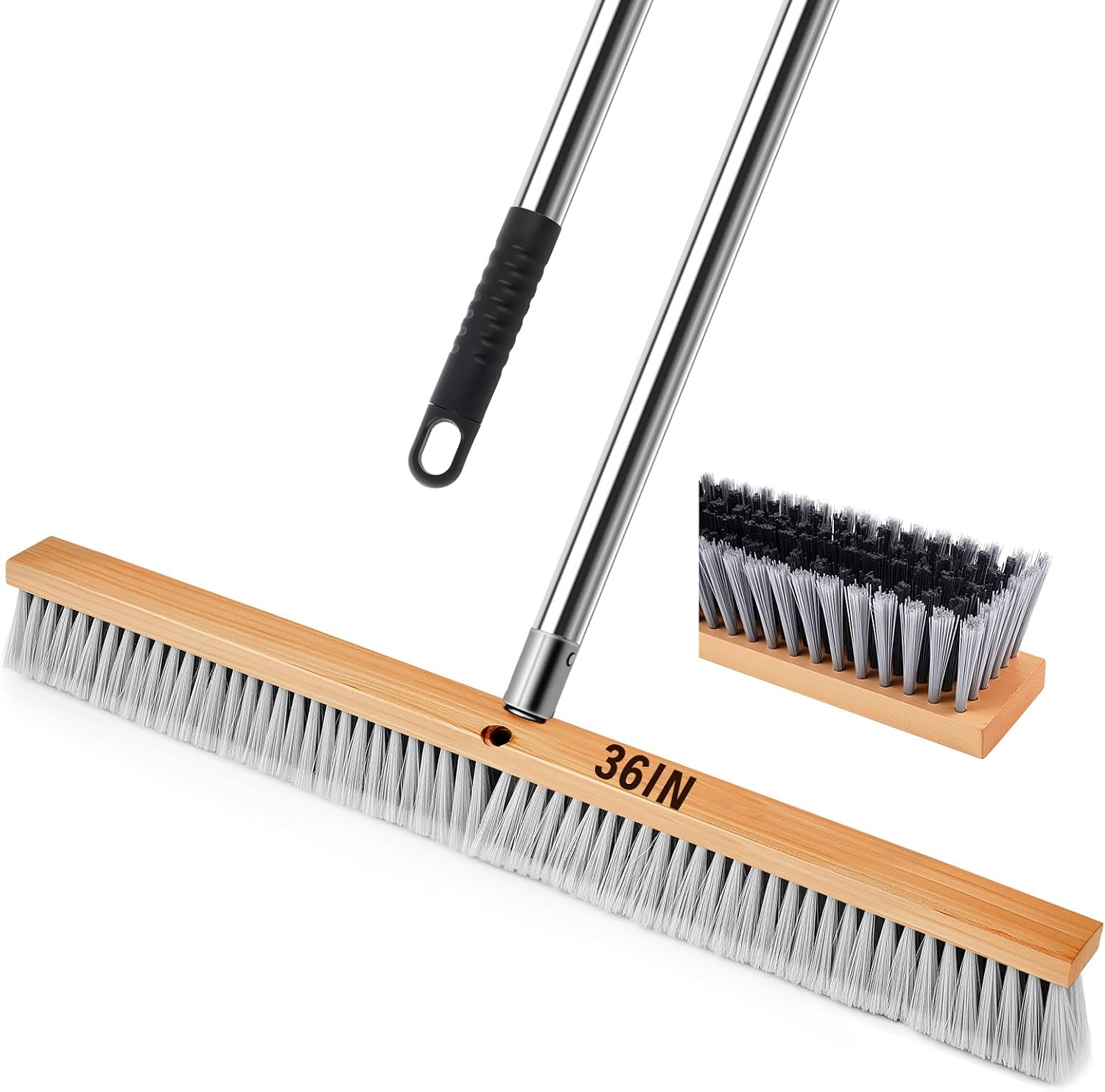
Broom used to sweep beads/dressing and debris from the playing surface, ideally 36-inch wide to cover half the width of a court on each pass. Standard shop brooms are not recommended as the bristles are too hard and spaced too wide, causing particles to catch and scrape the court surface.
Image: Daderot · Source
Court Squeegee
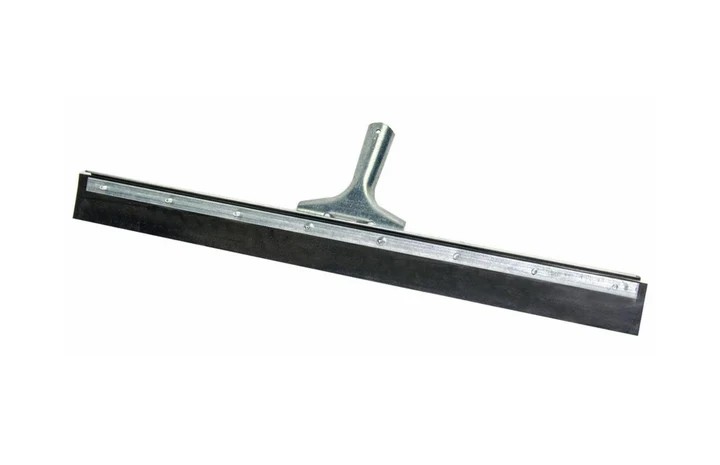
Water-removal tool for wet outdoor courts.
Image: Allen Shuffleboard · Source
Court Stencil
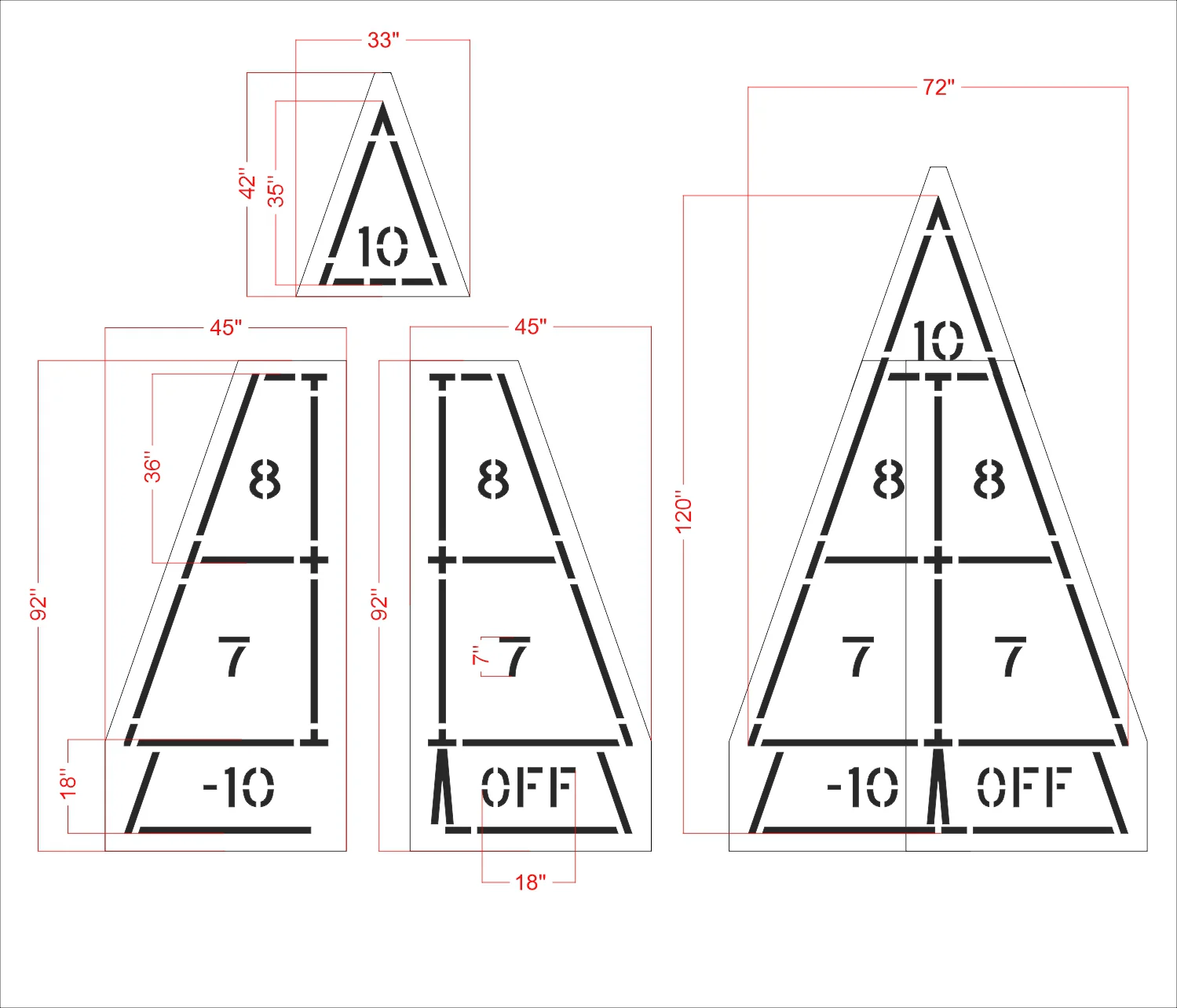
Reusable template for laying out/painting scoring triangles and court markings.
Court Wax
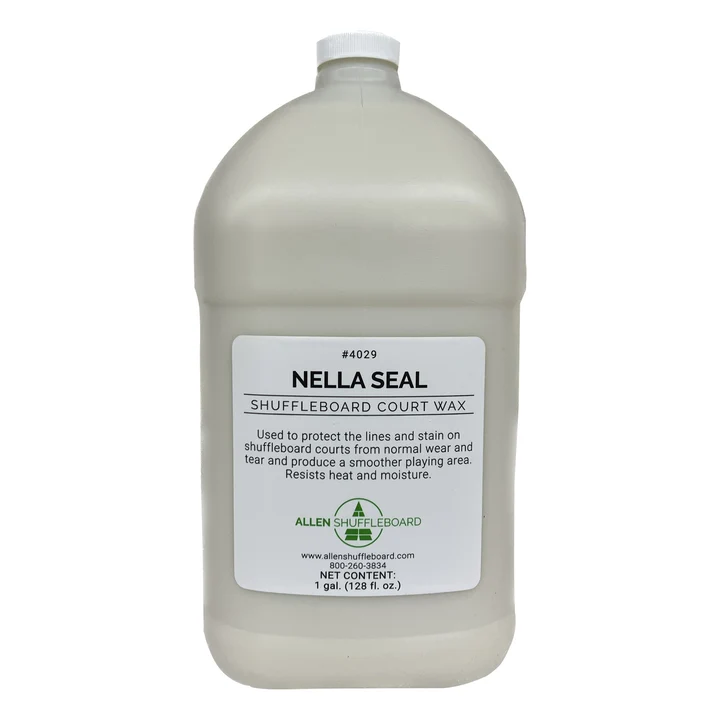
Liquid floor wax applied to a court surface for sealing, protection and reduction of friction.
Image: Allen Shuffleboard · Source
Cues
Official Cue Specifications
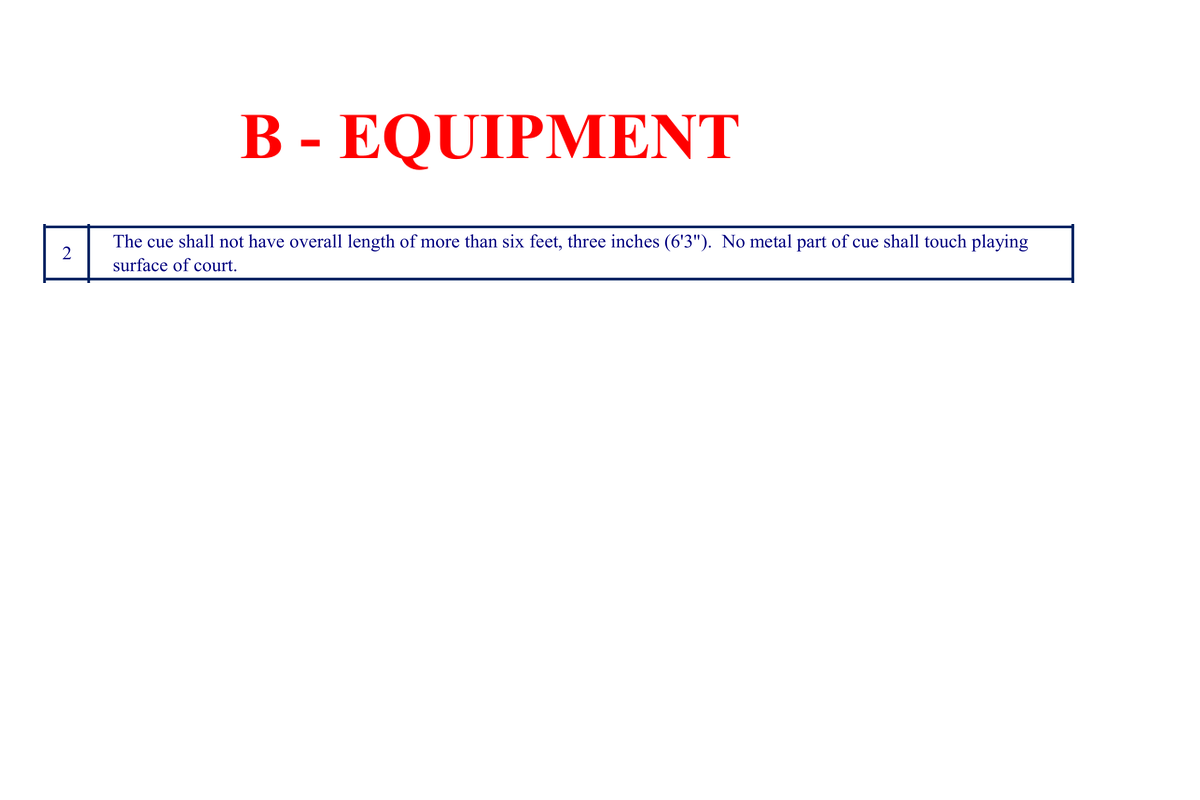
USA NSA rules set the maximum cue length at 6 feet 3 inches and prohibit any metal portion of the cue from touching the playing surface.
Image: USA National Shuffleboard Association source document · Source
Carbon Fiber Cue
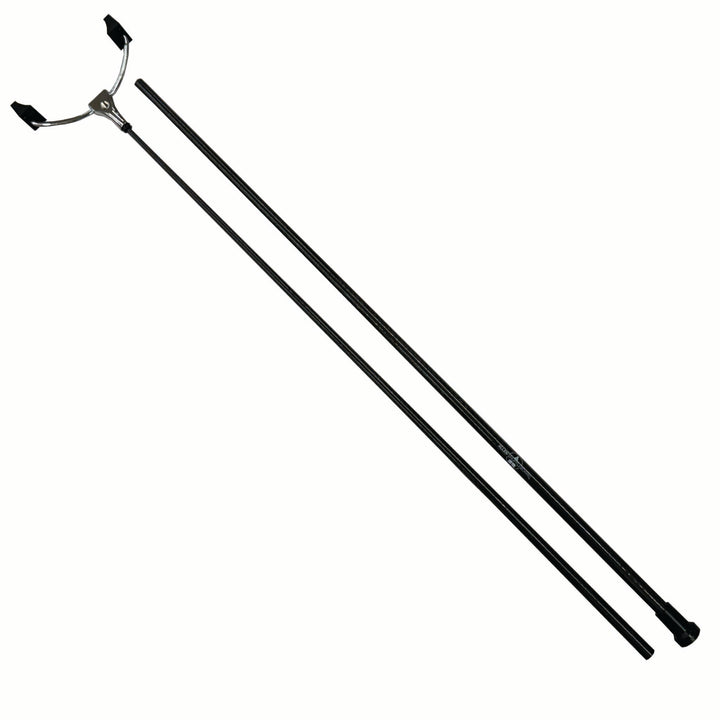
A cue with a shaft constructed of carbon fiber.
Image: Allen Shuffleboard · Source
Composite Cue
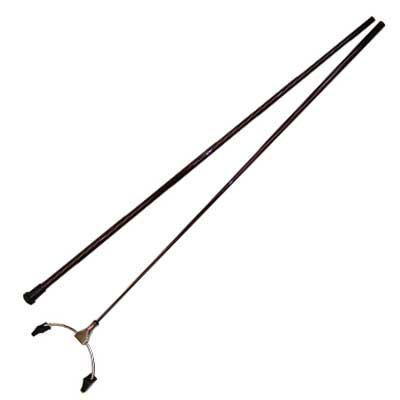
A cue with a shaft of graphite (less rigid) or carbon fiber (more rigid). Composite cues are designed for tournament competition, with lightweight tapered shafts which come in 1, 2, 3 or 4-piece versions.
Glider Cue
A cue with a glider head featuring a plastic crosspiece that spans the head from one prong to the other, replacing the swivel runners. The crosspiece rests atop the rear portion of the cue disc. Designed to avoid contact with the court by any portion of the cue when shooting. Originally designed for use on poly courts. Syn: RIDER CUE.
Graphite Cue
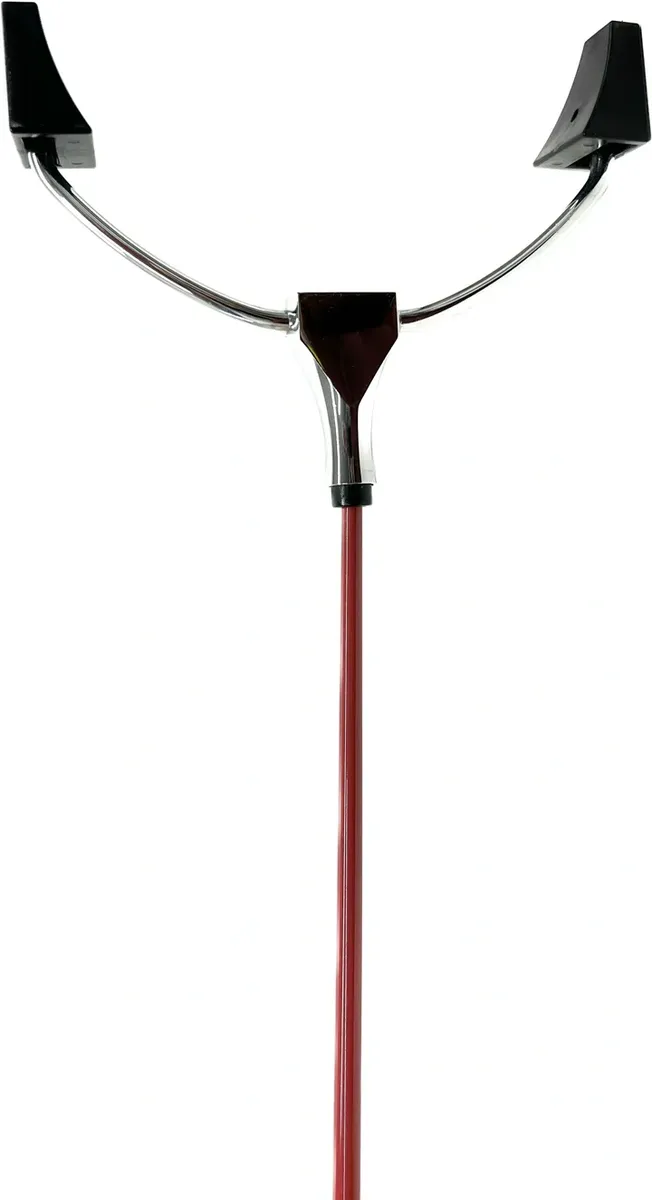
A cue with a shaft constructed of graphite.
Multi-Piece Cue
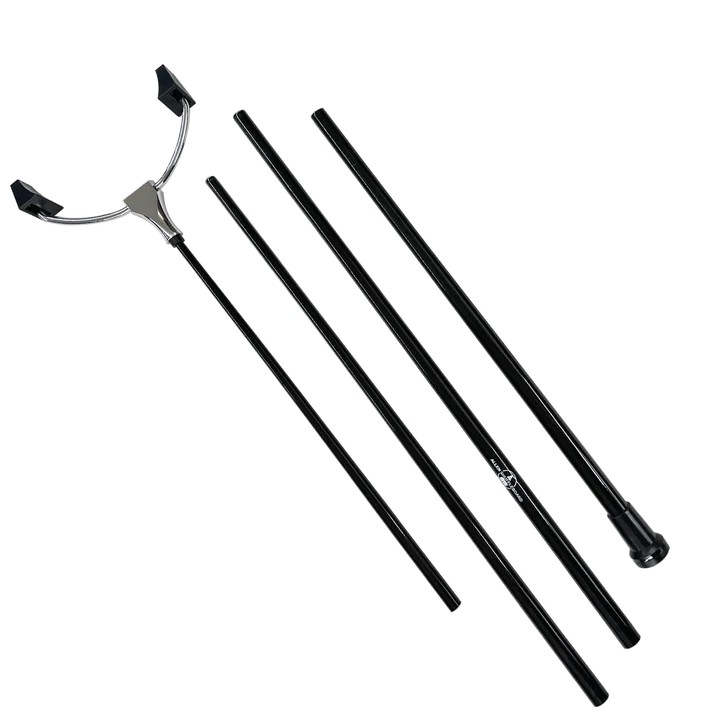
A cue constructed to be disassembled into multiple pieces for transport or storage.
Image: Allen Shuffleboard · Source
Recreational Cue

A cue with a uniform shaft, usually one-piece aluminum, and a recreational-style head (e.g., continental; resort; Tuffy), mainly intended for use at home, resorts, vacation spots or community centers, for recreational play. Syn: CLUB.
Telescopic Cue
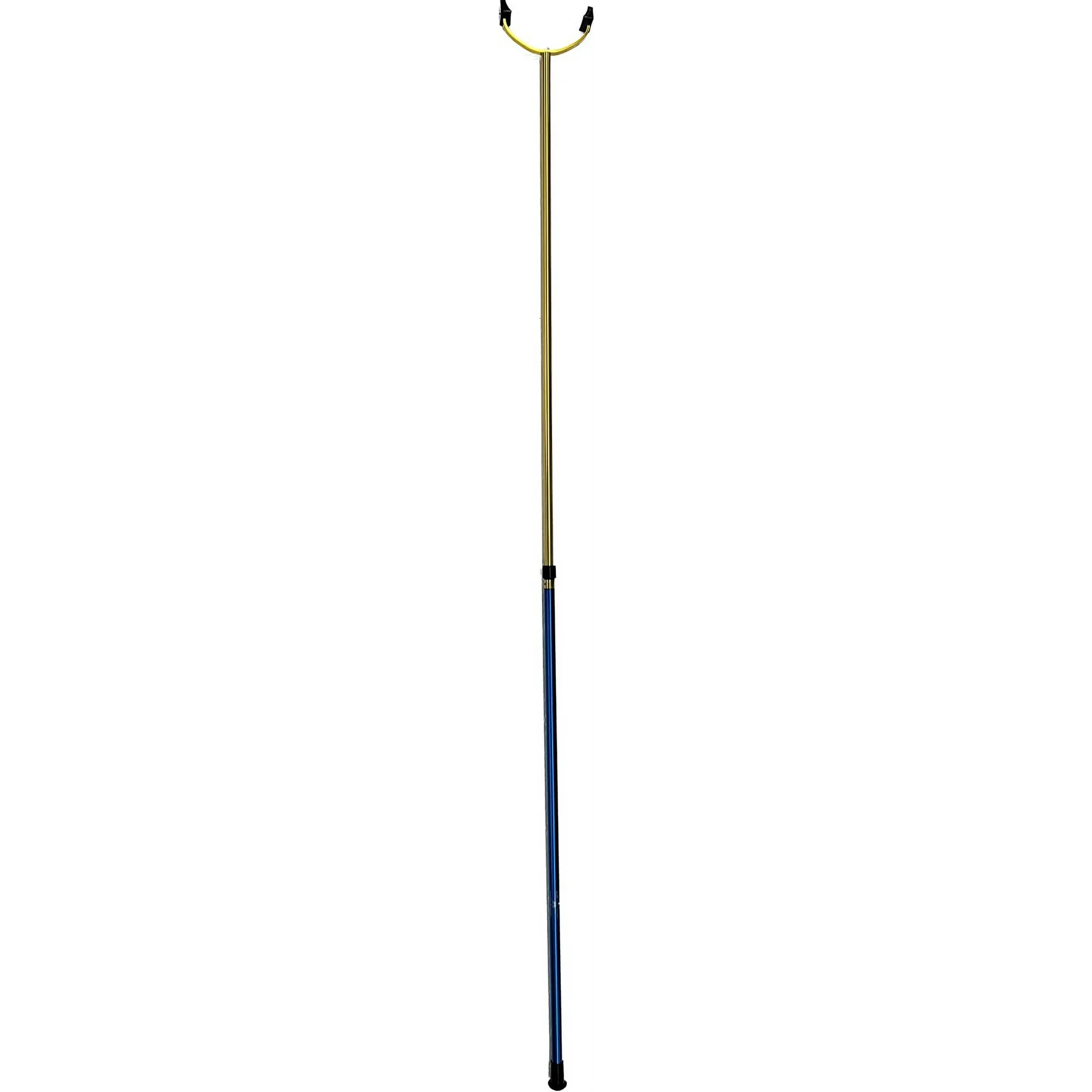
A cue with a shaft that can be nested for transport or storage, then extended for play. The cue length is adjustable as the shaft can be extended either partially or fully, making it appropriate for both children and adults.
Tournament Cue

A cue with advanced features such as swivel runners, multi-piece composite shaft, light-weight design and/or chameleon head, intended for use at competitive events.
Image: Allen Shuffleboard · Source
Wheelie Cue
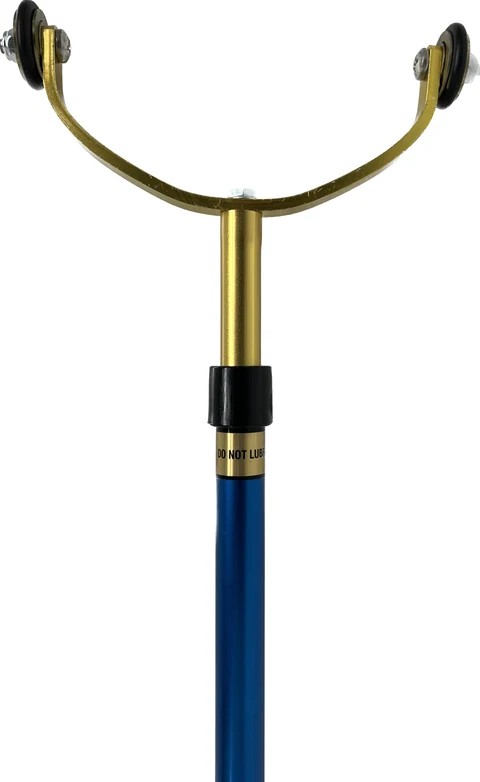
A cue with a wheelie head with replaceable metal wheel runners in place of the swivel runners. The wheels have metal ball bearings and rubber O-ring tires. Designed for outdoor windy conditions to counteract the effect of the wind on the moving cue when shooting. Used mainly in Western USA, most frequently in Texas.
Image: Allen Shuffleboard · Source
Cue Heads & Parts
Bicycle Grip
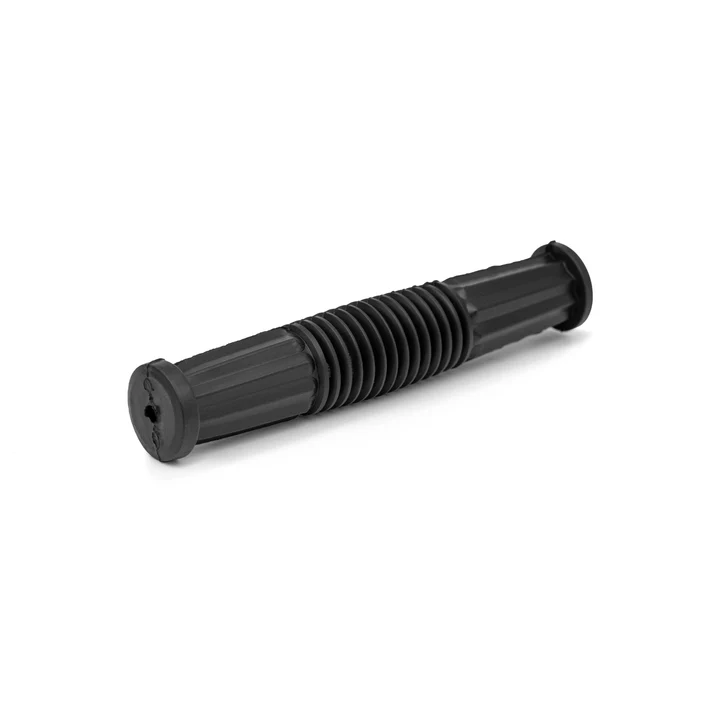
A cue similar in shape to bicycle handlebar grips, much longer than the standard cue cane grip. The grip diameters for shuffleboard cues are 5/8" or 3/4" (standard grips for bicycles are 7/8").
Cane Grip

A cue grip constructed of rubber, covering a small length of the cue shaft end.
Image: Allen Shuffleboard · Source
Ball Runners
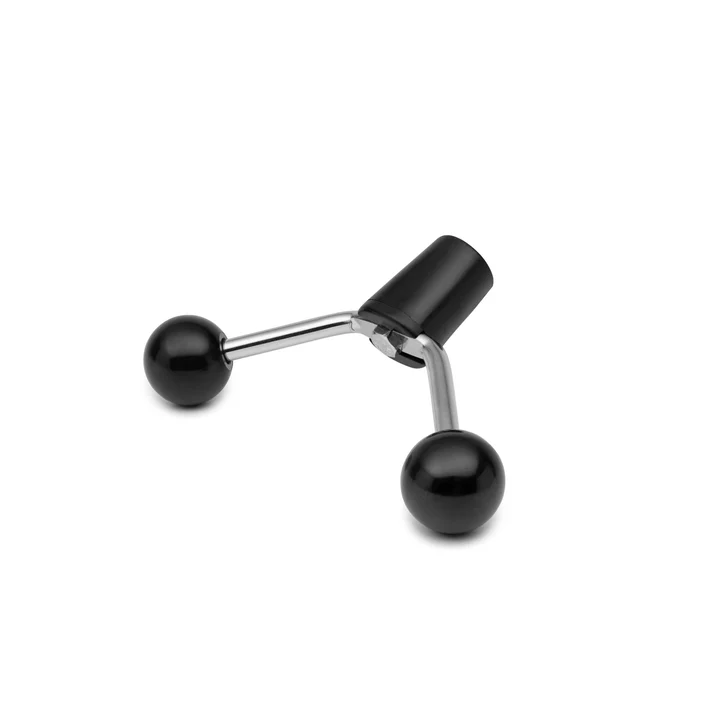
Round plastic runners.
Big Foot Runners

Swivel runners with a concave surface on the inner side to maximize contact with the cue disc.
Chameleon Head
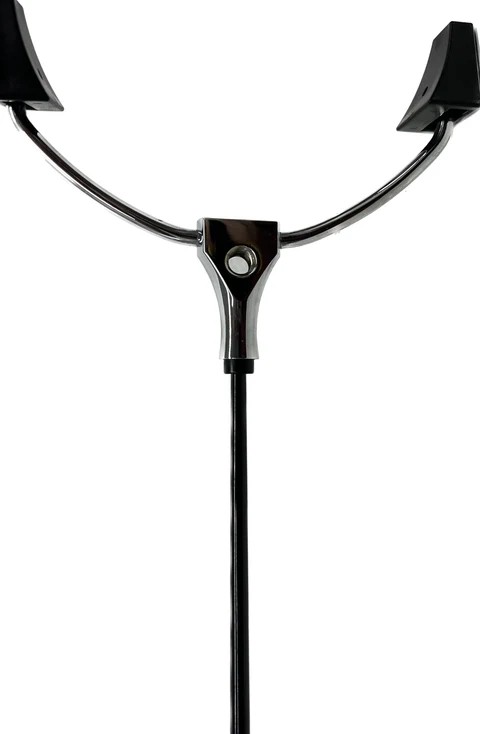
A swivel cue head that has a threaded hole in the center that accepts various-sized screw-in weights, making the head weight-adjustable.
Image: Allen Shuffleboard · Source
Continental Head

A molded-plastic corrugated cue head with replaceable swivel runners. (For recreational cues)
Glider Head
A swivel cue head featuring a plastic crosspiece that spans the head from one prong to the other, replacing the swivel runners. The crosspiece rests atop the rear portion of the cue disc. Designed to avoid contact with the court by any portion of the cue when shooting.
Image: Allen Shuffleboard
Statru Head
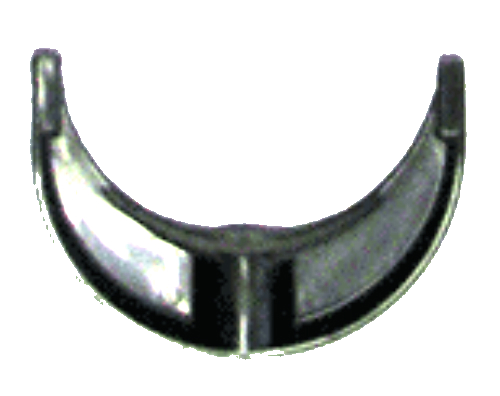
(Pronounced "stay-true".) A one-piece, U-shaped, molded-plastic cue head with integrated permanent flat runners. (For recreational cues)
Swivel Runners

Plastic runners with a triangular shape but truncated flat instead of pointed ends. Designed to swivel on a central axis when shooting a cue disc such that through the end of the shot the bottom edge of the runner retains full contact with the court and the inner side remains in contact with the disc.
Tuffy Head

A V-shaped steel cue head with replaceable ball runners, which bolts to a plug in the cue shaft. (For recreational cues)
Westerner Runners
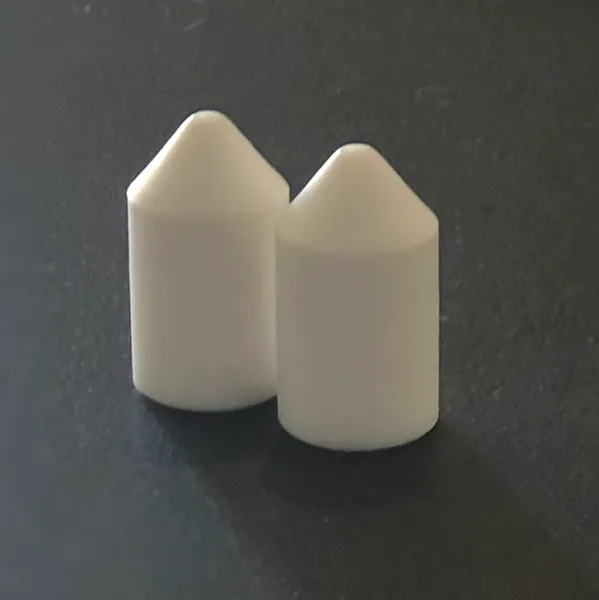
Cylindrical Teflon runners with a pointed tip, that attach to the prongs of a cue head, designed for minimal contact with the court to minimize displacement of the beads. Especially for use in Arizona, California and other locations with diamond-finished courts.
Wheelie Head

A 5 1/2W Swivel head with replaceable metal wheel runners in place of the swivel runners. The wheels have metal ball bearings and rubber O-ring tires. Designed for outdoor windy conditions to counteract the effect of the wind on the moving cue when shooting. Used mainly in Western USA, most frequently in Texas.
Discs
Disc Spinner

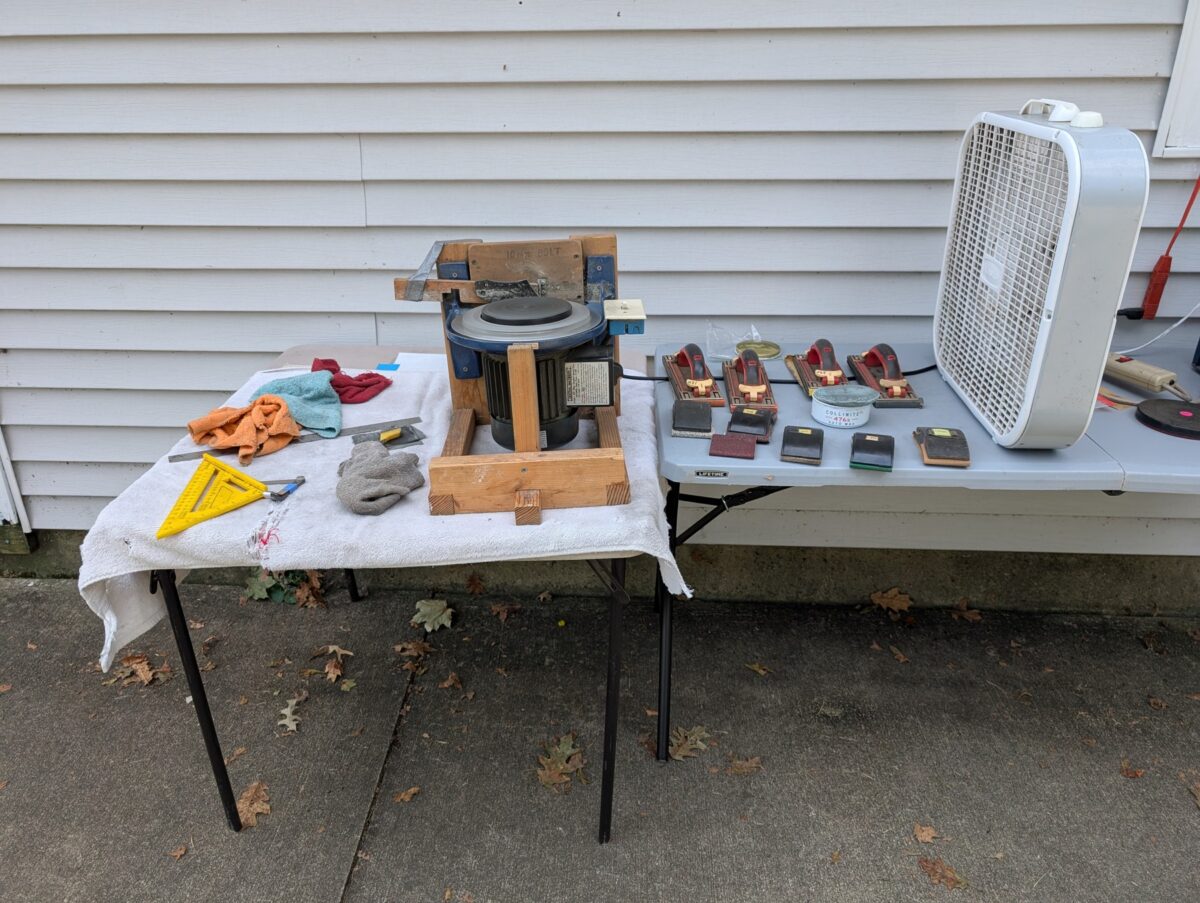
An electro-mechanical machine that spins discs to facilitate cleaning and waxing of the bottoms. Usually a wooden box enclosing one or two electric spin motors, often repurposed from a floor waxing machine, with attached spinning platforms on which discs are laid bottom up. To apply a coat of wax, with the motor spinning the disc a solid wax stick is drawn across the bottom, or a paste wax is spread on it with a soft cloth.
Official Disc Specifications
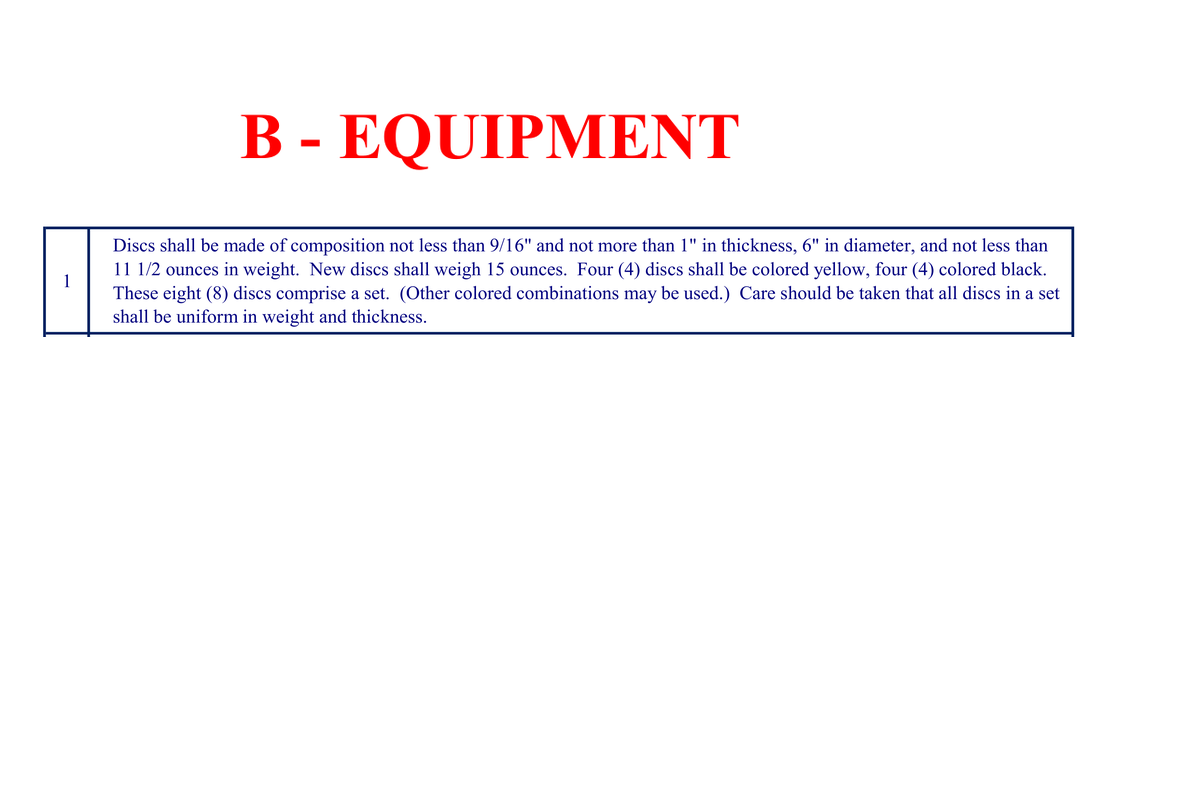
USA NSA rules specify discs 6 inches in diameter, 9/16 inch to 1 inch thick, at least 11.5 ounces in weight, with new discs specified at 15 ounces.
Image: USA National Shuffleboard Association source document · Source
Disc Sets
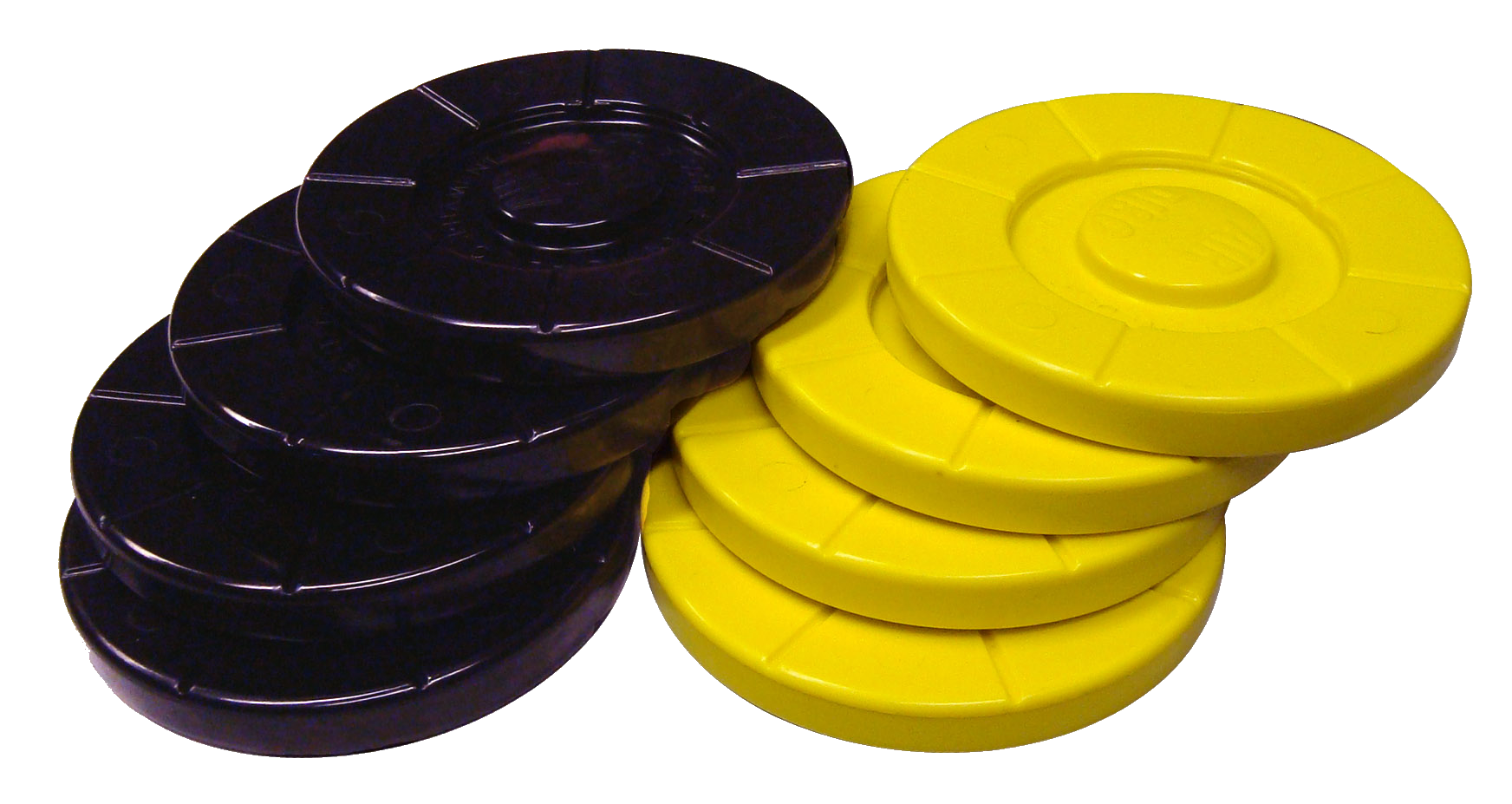
Complete sets of eight discs for play, in contrasting colors. Buying choices should be checked against official specifications when regulation compatibility matters.
Disc Carrier – Plastic
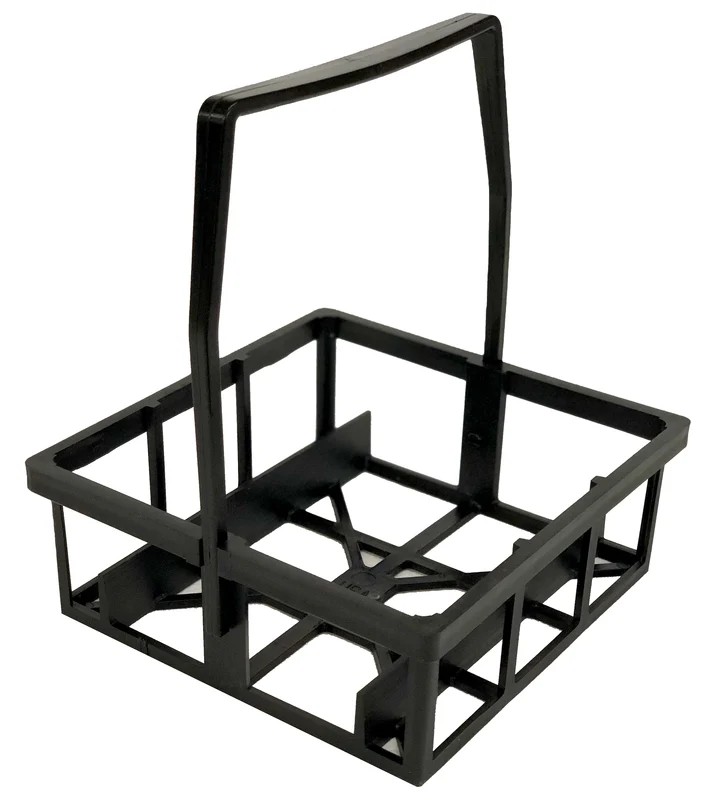
A carrier keeps a set of discs organized and easier to move between storage and the court.
Image: Allen Shuffleboard · Source
Disc Carrier – Wood

A carrier for organizing and transporting a set of discs.
Image: DOM Sports Shuffleboard · Source
Hard Disc Wax

Hard wax that is applied to the bottom surface of discs to reduce the friction between the bottoms of moving discs and the court surface. Can be applied by hand in a star pattern and rubbed in, or drawn across the disc surface as it spins on a disc spinner. Use a microfiber cloth to remove excess wax and buff the surface.
Paste Wax
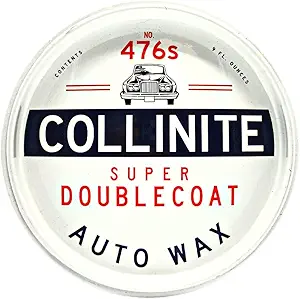
Soft paste wax that is applied to the bottom surface of discs to reduce the friction between the bottoms of moving discs and the court surface. Can be applied with a soft cloth either by hand or drawn across the disc surface as it spins on a disc spinner. Use a microfiber cloth to buff after application. Hard disc wax can be applied atop the paste wax. Collinite 476 Super Doublecoat Auto Wax is recommended.
Microfiber Cloths
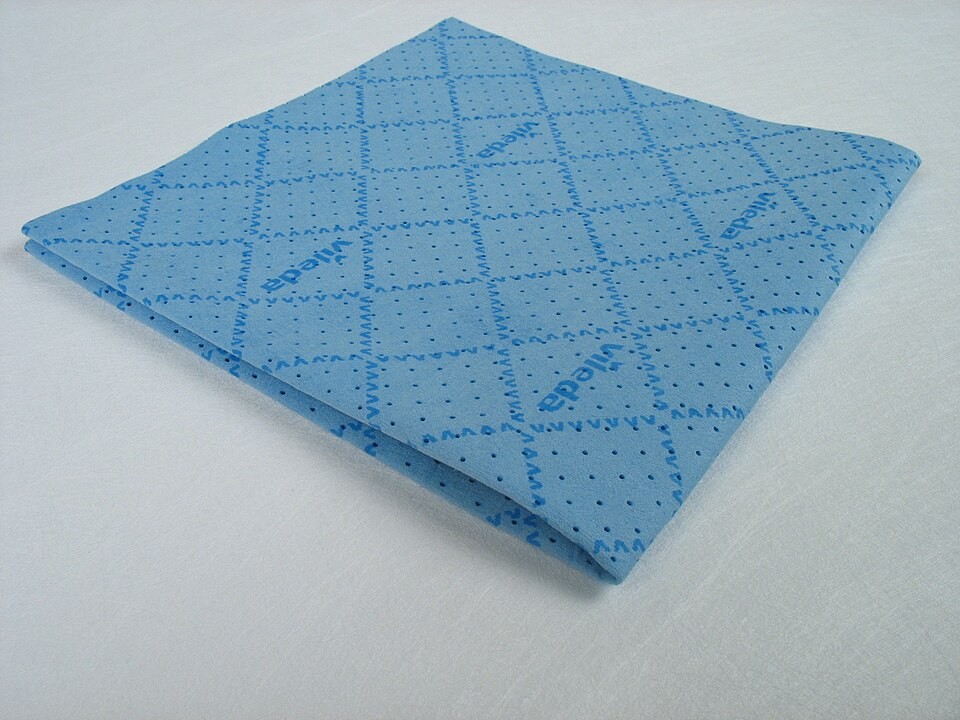
Soft cloths used for cleaning and handling discs during care routines. Mainly used for cleaning dust or removing extra wax off the bottoms of discs.
Image: Polyesterchen · Source
Disc Maintenance
Disc Care and Maintenance – Jim Albrecht
Source: Jim Albrecht
Disc Reconditioning and Maintenance – Dusty Sacks

Source: Dusty Sacks
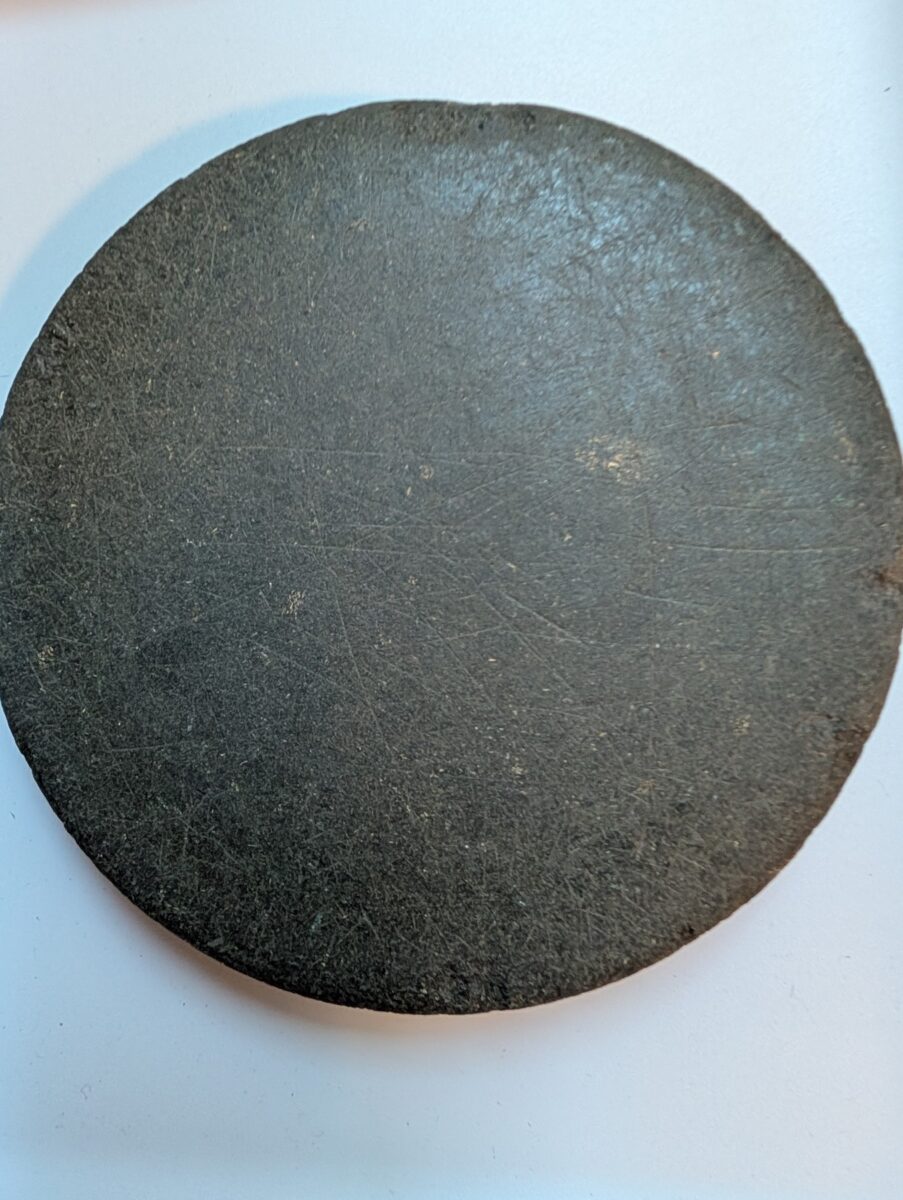
Repairing a Chipped Disc – Jim Albrecht
Source: Jim Albrecht
Feeler Gauge

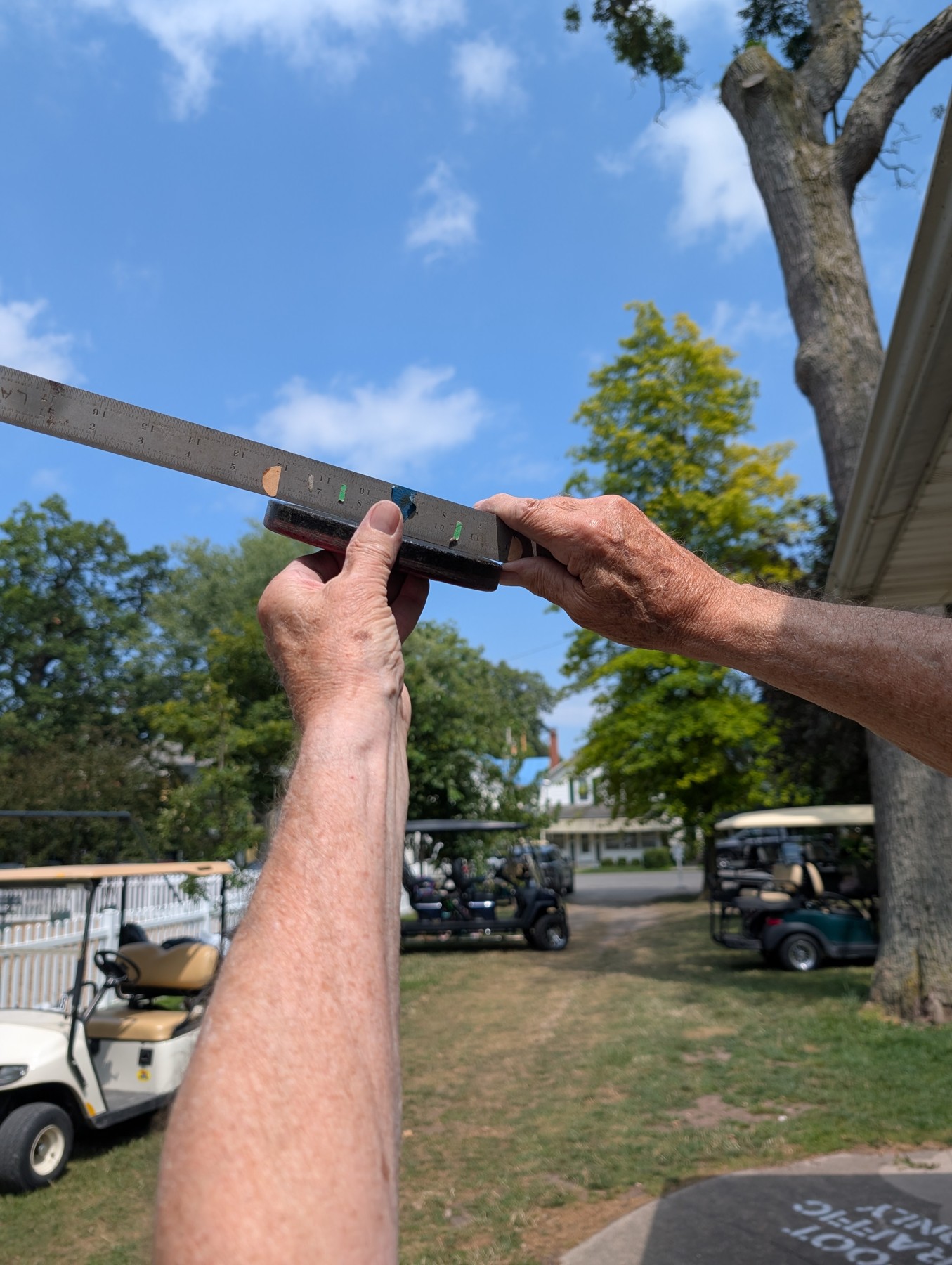
Thin gauge used with a straightedge to evaluate gaps/flatness on a disc bottom.
Machinist Straightedge
Tool for checking whether a disc bottom is flat or has high/low areas.
Sanding Blocks & Abrasives
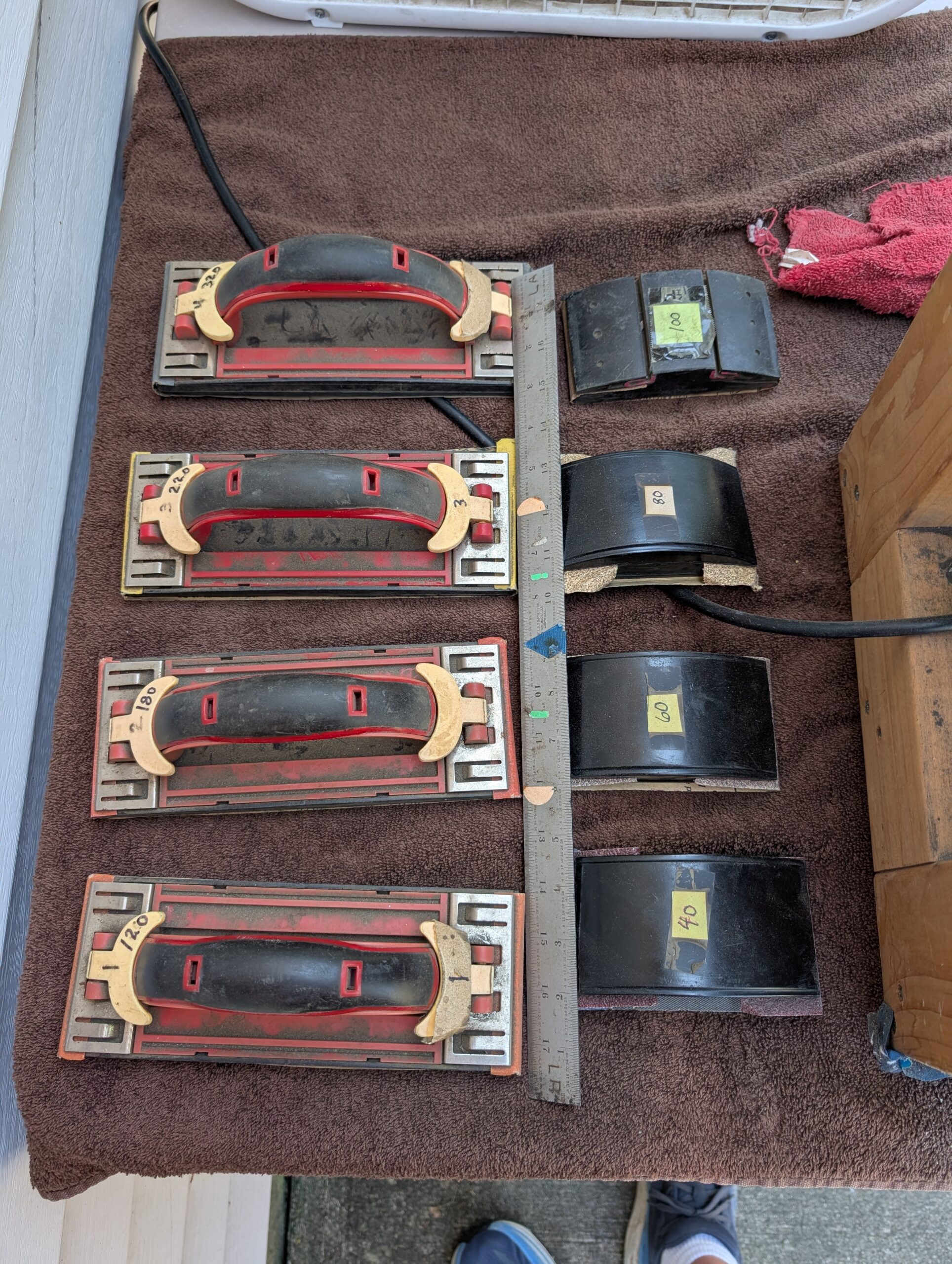
Tools used in disc-shaping/refinishing methods.
Image: Jim Albrecht
Disc Spinner
An electro-mechanical machine that spins discs to facilitate cleaning and waxing of the bottoms. Usually a wooden box enclosing one or two electric spin motors, often repurposed from a floor waxing machine, with attached spinning platforms on which discs are laid bottom up. To apply a coat of wax, with the motor spinning the disc a solid wax stick is drawn across the bottom, or a paste wax is spread on it with a soft cloth.
Suppliers & Services
Allen Shuffleboard
Court-shuffleboard manufacturer and supplier offering cues, discs, equipment sets, court systems, scoreboards, parts, and supplies.
DOM Sports Shuffleboard
Canadian supplier of court-shuffleboard cues, discs, sets, courts, scoreboards, parts, dressings, and accessories.
Planet Shuffleboard
Manufacturer of modular plastic court-shuffleboard courts in full and compact sizes, with related equipment sets.
Norfolk Boards / Shuffleboard UK
UK and Europe supplier of court-shuffleboard courts, equipment sets, cues, discs, scoreboards, stencils, waxes, and accessories.
Poly Glide, Inc.
Court-shuffleboard supplier specializing in court dressings, beads, cleaners, restorers, and maintenance products.
VersaCourt
Modular shuffleboard court-system supplier offering residential court kits, custom layouts, and court accessories.
Ace Shuffleboard Court Painting
Tampa Bay service provider for shuffleboard-court painting, lining, sealing, resurfacing, pressure washing, and restoration.
Armor Courts
South Florida sports-surfacing contractor providing shuffleboard-court construction, resurfacing, maintenance, and restoration.
As an Amazon Associate I earn from qualifying purchases.